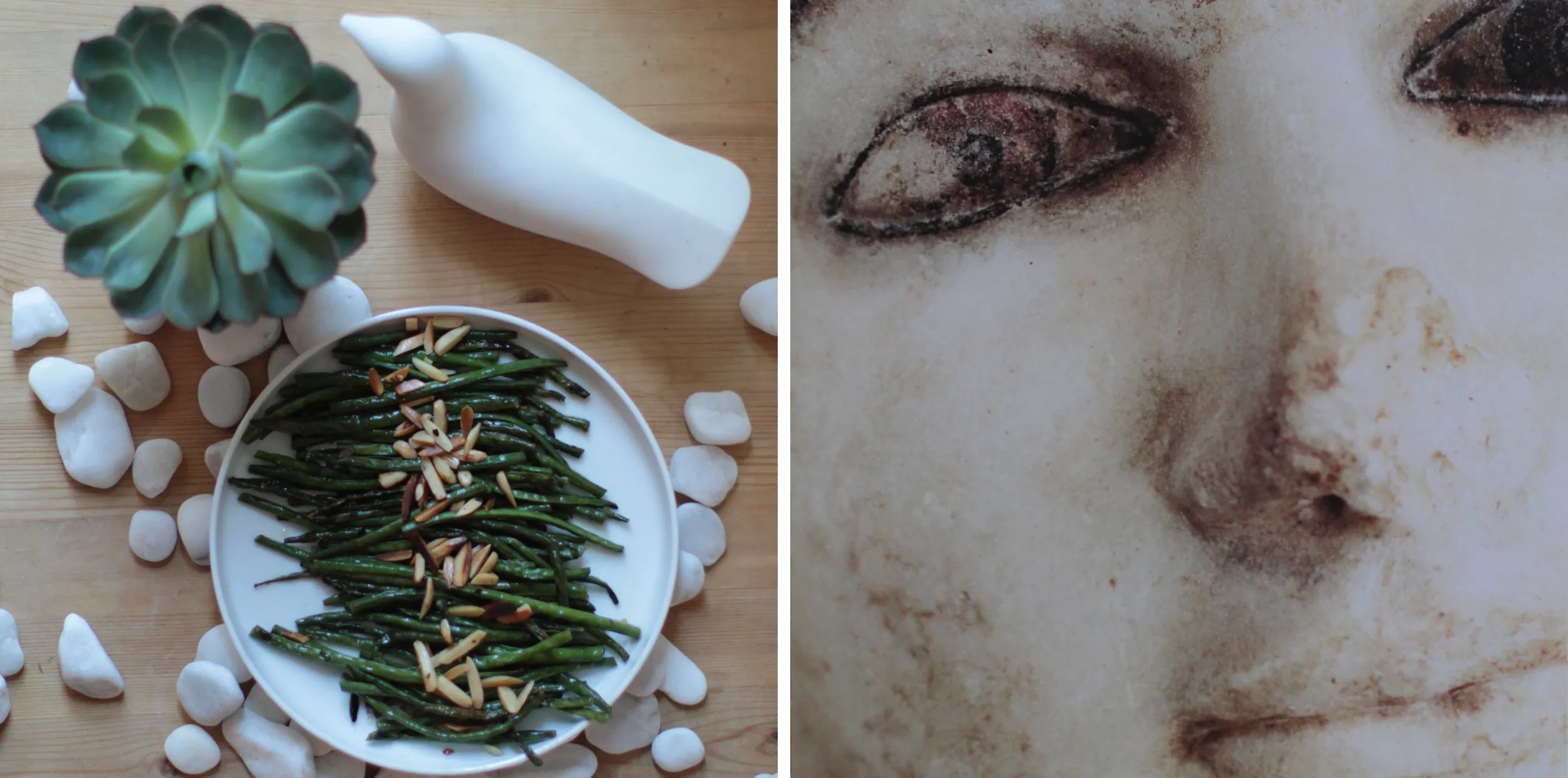
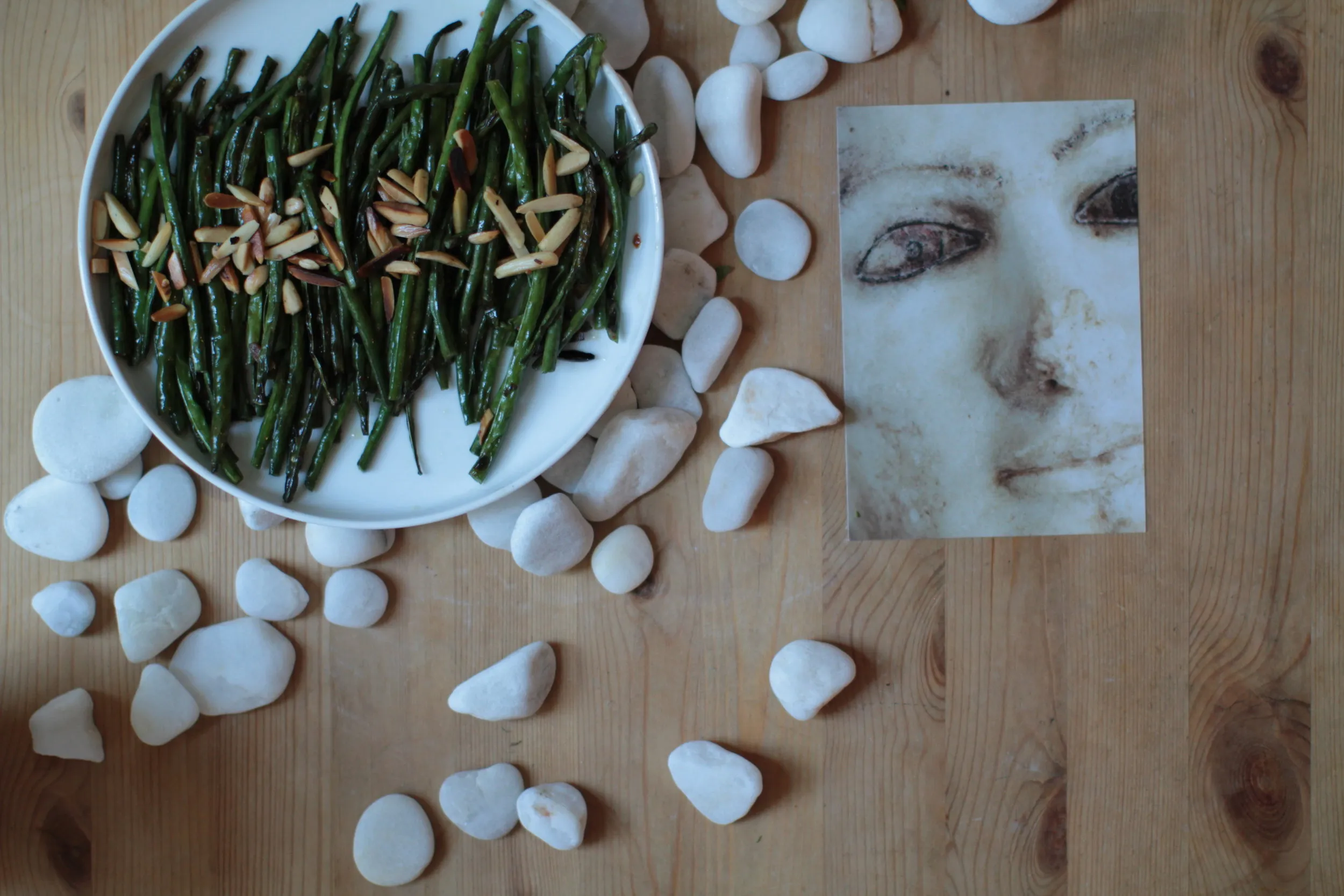
The Korai (plural for “Kore”—Greek: κόρη, meaning daughter or maiden) are a group of female statues that were found on the Acropolis east of the Parthenon in the late 19th century. They served as votives to the gods; their right hands are often holding a flower, fruit or bird. The chronology of their creation marked the period of Ionian influence on Attic sculpture and mode of dress. The sculptures typically portrayed the women with ornate, unbound hair, representing their status as unmarried. Most kore are believed to represent Artemis, goddess of the hunt, the wilderness, and animals (my favorite Greek goddess); those more serious in nature may portray Athena. They have smiling faces and dress in the islander Ionic style. This postcard is of Kore No. 684, a sculpture at the Acropolis Museum in Athens, Greece. The kore were painted decoratively, but very little remains aside from the detailing of her striking eyes and subtly smiling, knowing face.
I paired the image of this sculpture with a very simple dish of green beans, a food that reminds me of a landscape of vertical trees one might run through—a wild forestland befitting a goddess who ran with the animals of the woods. I admire their simplicity and how easily they can be turned into a very nourishing food; this is something you could make by a campfire if you wished. Cooked quickly at high heat in a cast-iron skillet these beans produce a crunchy, blistered texture. If you prefer your beans softer, you can boil them for a few minutes first, but be first to dry them before putting them into the hot skillet.
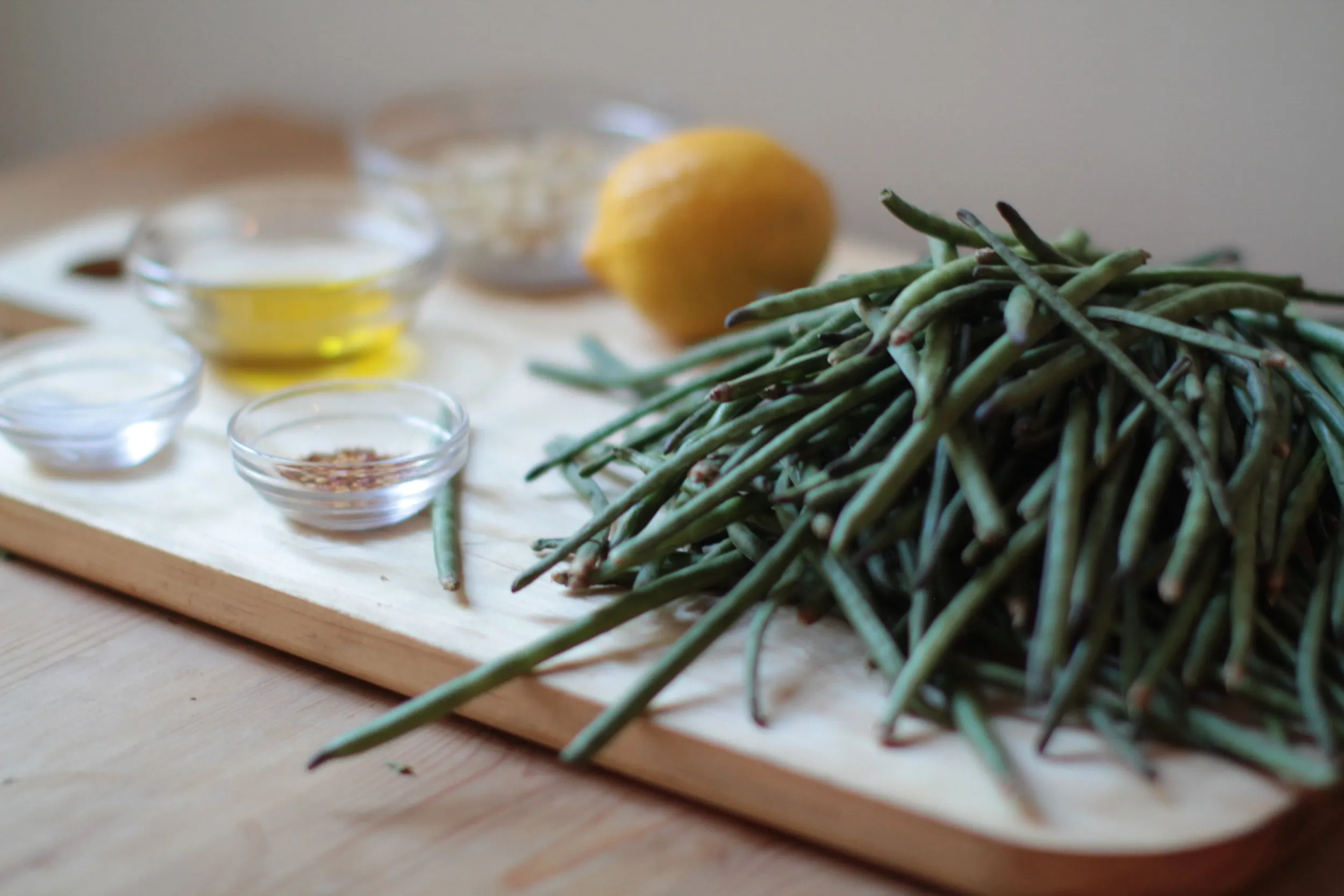
Ingredients
- 1 lb. green beans, ends trimmed
- 2 tbsp olive oil
- 1 tsp salt
- juice of one lemon
- 1 tsp chili pepper flakes (optional)
- 1/4 cup almond slivers or slices (optional)
Process
Note: If you prefer your green beans softer, boil them for a few minutes first, but make sure they’re dry before placing in the skillet.
- Wash and trim your beans. Make sure they’re dry.
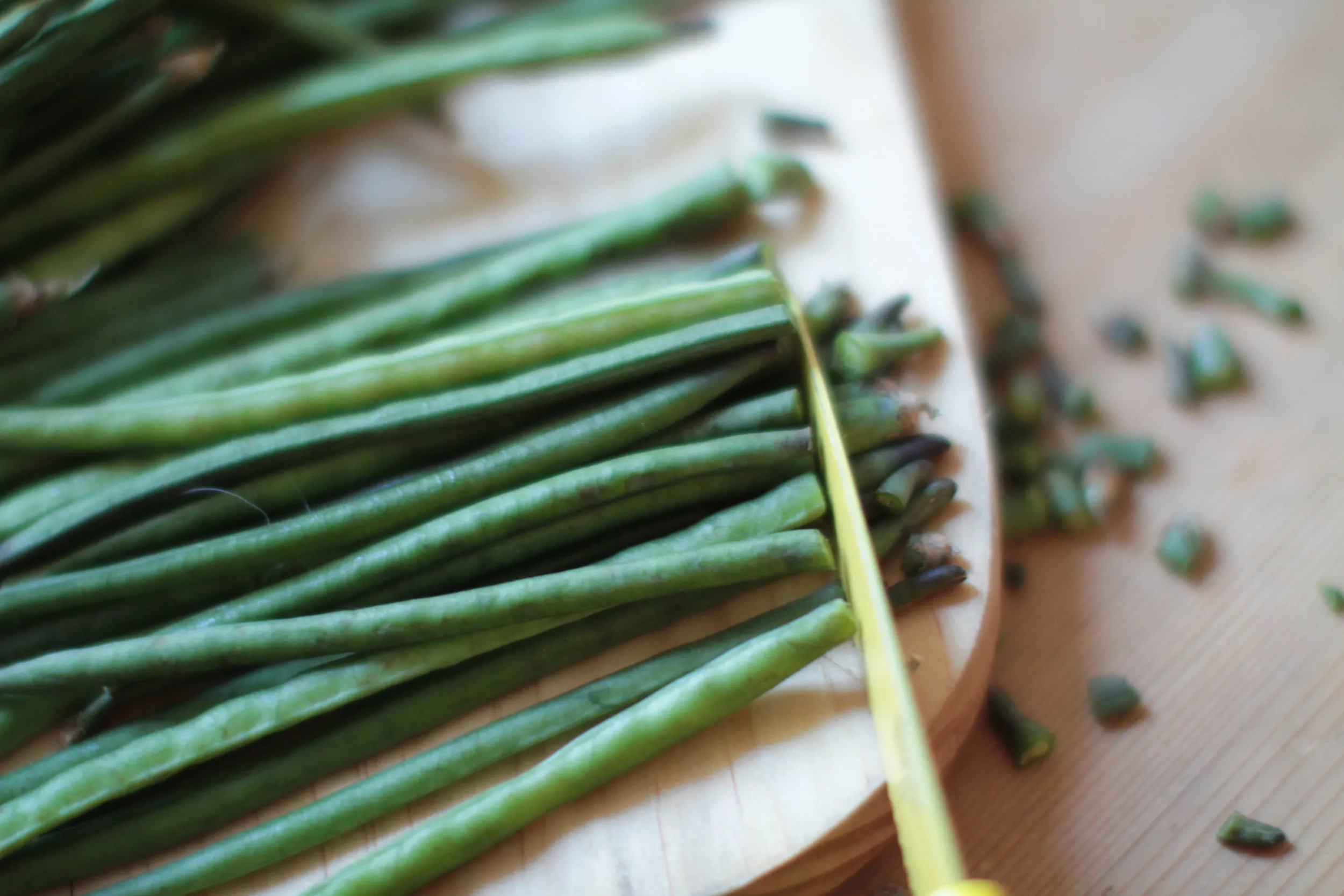
Note: I was taught to trim the beans one at a time, using the dull side of the knife more as a lever to break the end off than to cut it, so you can pull it backwards to get as much of the string off as possible. If you have the patience or company to sit around a table with while trimming beans, do that. You’ll get more tender beans. If you’re in a hurry or don’t feel like the extra effort—and if your beans are fairly young and thin—you can just cut off the ends without risking a stringy result. I like to line them up in a row to make them easier to disperse and flip once in the skillet.
- Heat cast iron skillet to medium-high heat. Add olive oil.
- As soon as the oil is hot, add your green beans before it smokes. Disperse as evenly as you can (I like to lay them in a row for easy flipping). Sprinkle with the red pepper flakes and let them cook for about 5 minutes, until the underside starts to brown.
- Flip them as evenly as possible, then let them cook for another 5-8 minutes on the other side.
- Meanwhile, toast your almond slivers in another pan over medium heat, no oil needed, just move them continuously so they don’t burn. (You can also do this in the same pan, before making the green beans).
- Add lemon juice and salt. Stir to coat evenly, top with almonds and serve.