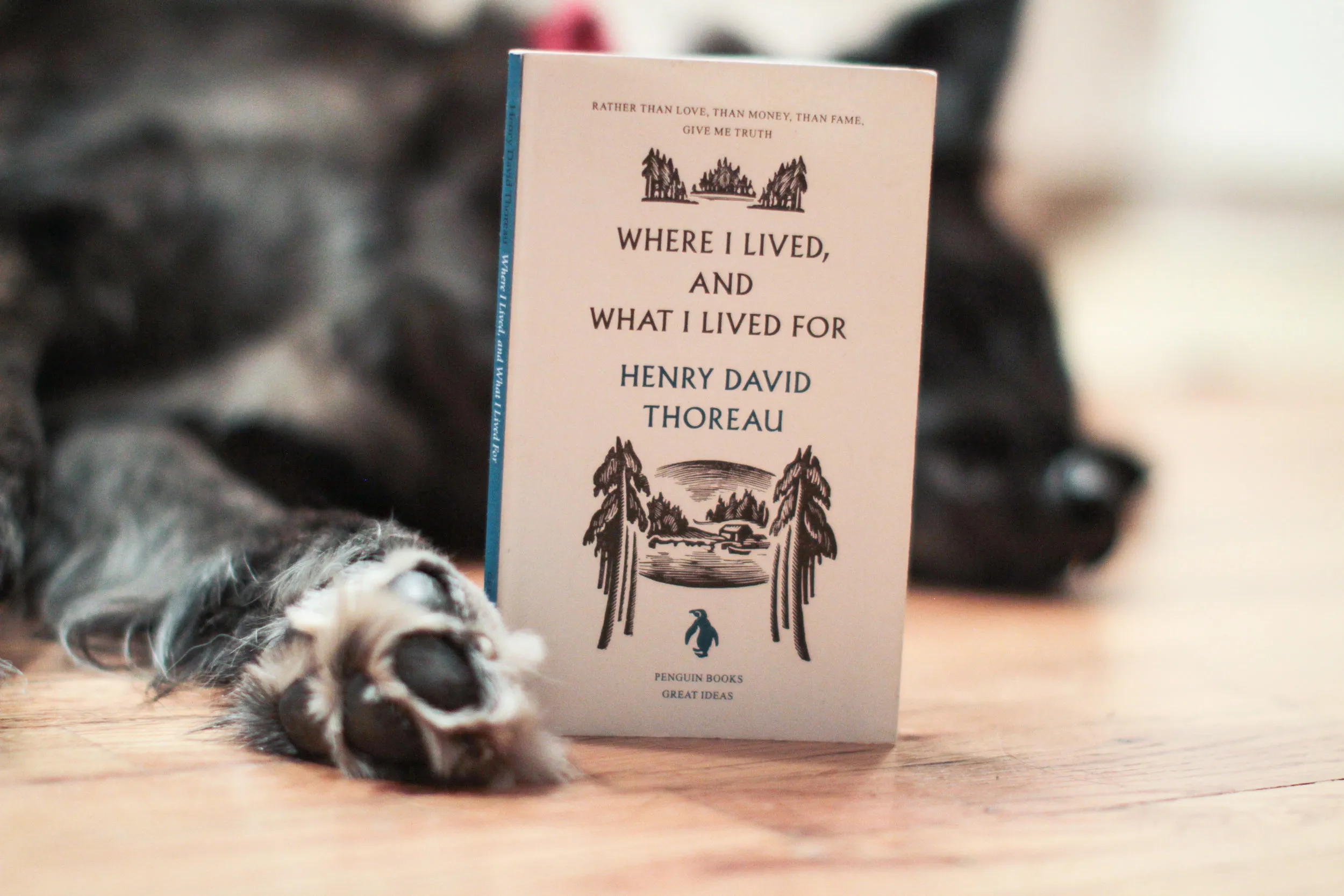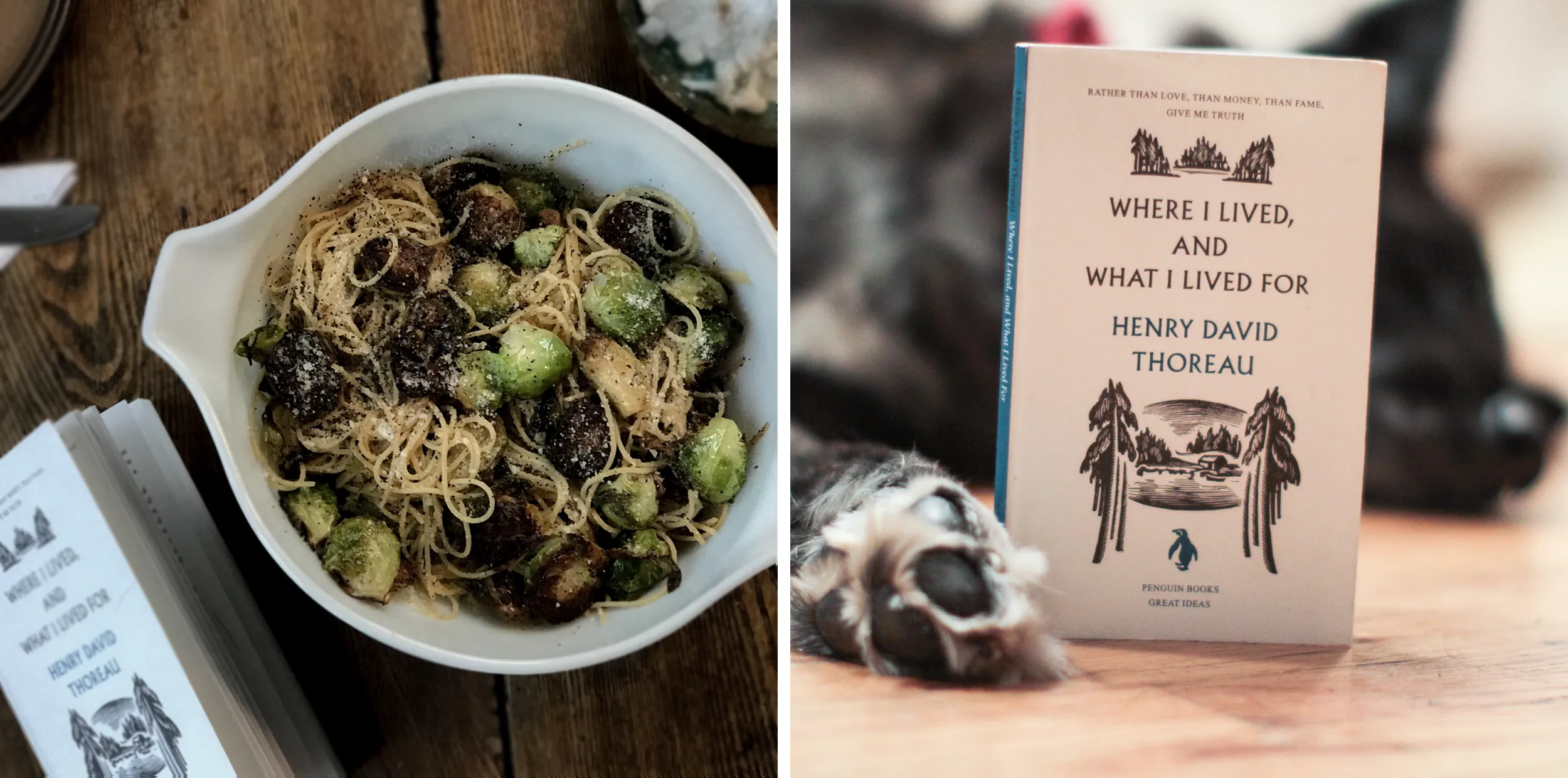
For Thanksgiving of 2016, I rented a cabin in the Catskills and told my then-fiancée only that we would be celebrating Thanksgiving “elsewhere.” I loaded a cooler with some simple Thanksgiving ingredients, including a pre-smoked Greenberg Turkey, a jar of my mom’s cranberry sauce, a side each of potatoes and sweet potatoes handmade by Jalapa Jar in Brooklyn (they had a stand on my way home from work), some brussels sprouts and a cast iron skillet. With partner, dog, books and food in tow, we drove through the beautiful grandeur of upstate New York, braving a snowed-over back road to arrive at our A-frame cabin just in time to light a fire and watch a snowstorm roll in. We relished in the calm, read our books, and enjoyed a very simple Thanksgiving meal together, with candlelight glowing as our dog snoozed at our feet.
One of the books I chose to read on this trip was Henry David Thoreau’s Where I Lived and What I Lived For (1924), in which Thoreau details his time spent aiming for a simpler, richer life during which he provided for his needs with as few material purchases as possible. He built his home in the New England woods at Walden Pond, where I once rode my bike to on a long and joyous ride from Cambridge, Massachusetts where I lived at the time. One might equate reading this book to an experiential kind of “lumbersexual hipster cabin porn”—reading about the simplified, intellectually stimulating, immersed-in-nature life is ever appealing and soothing to us today during a time when neoliberal structures manipulate every facet of our inner and outer lives, calling not for a communion with nature but only with consumption and mindless support of those who pull the marionette strings of political hegemony. Everything Thoreau’s principles stood for are in continued need of support today, and one can find great inspiration in his writings.
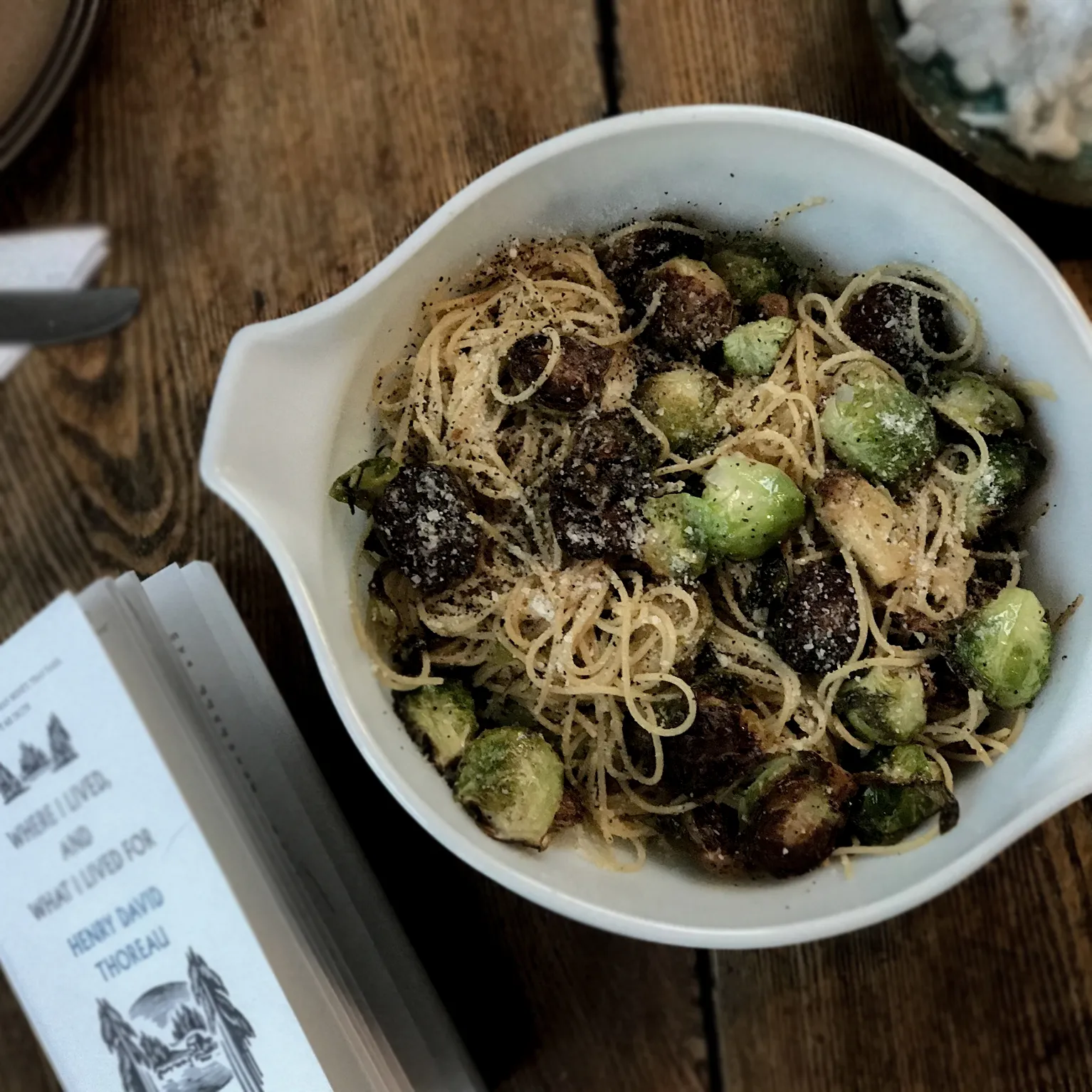
Although I had intended to make my favorite brussels sprouts recipe (from the New York Times) to add to our sides for Thanksgiving, we were both so relaxed and at peace that we put off all cooking and ate only the pre-made foods for our actual Thanksgiving meal. Instead, I made the brussels sprouts the next day, and added them to some pasta I found in the cabin’s pantry, to turn them into an entree.
Throwing together simple ingredients and turning them into a meal is one of my favorite pastimes. There is a beauty to the simplicity that has not to do with a negative value of “making do with little” but a positive value of essentiality—focusing on what is necessary, cherishing the honesty of those foods and learning from their nourishment. This recipe takes brussels sprouts and caramelizes them beautifully with the simple additions of olive oil and garlic, and a touch of balsamic vinegar at the end. Add them to pasta with or without parmesan for a filling, earthy meal.
“I went to the woods because I wished to live deliberately, to front only the essential facts of life, and see if I could not learn what it had to teach, and not, when I came to die, discover that I had not lived.”
— Henry David Thoreau
The brussels sprouts portion of this recipe is from the one and only Mark Bittman, (whose book Kitchen Matrix is a wonderful thing to have around), published by The New York Times.
Ingredients
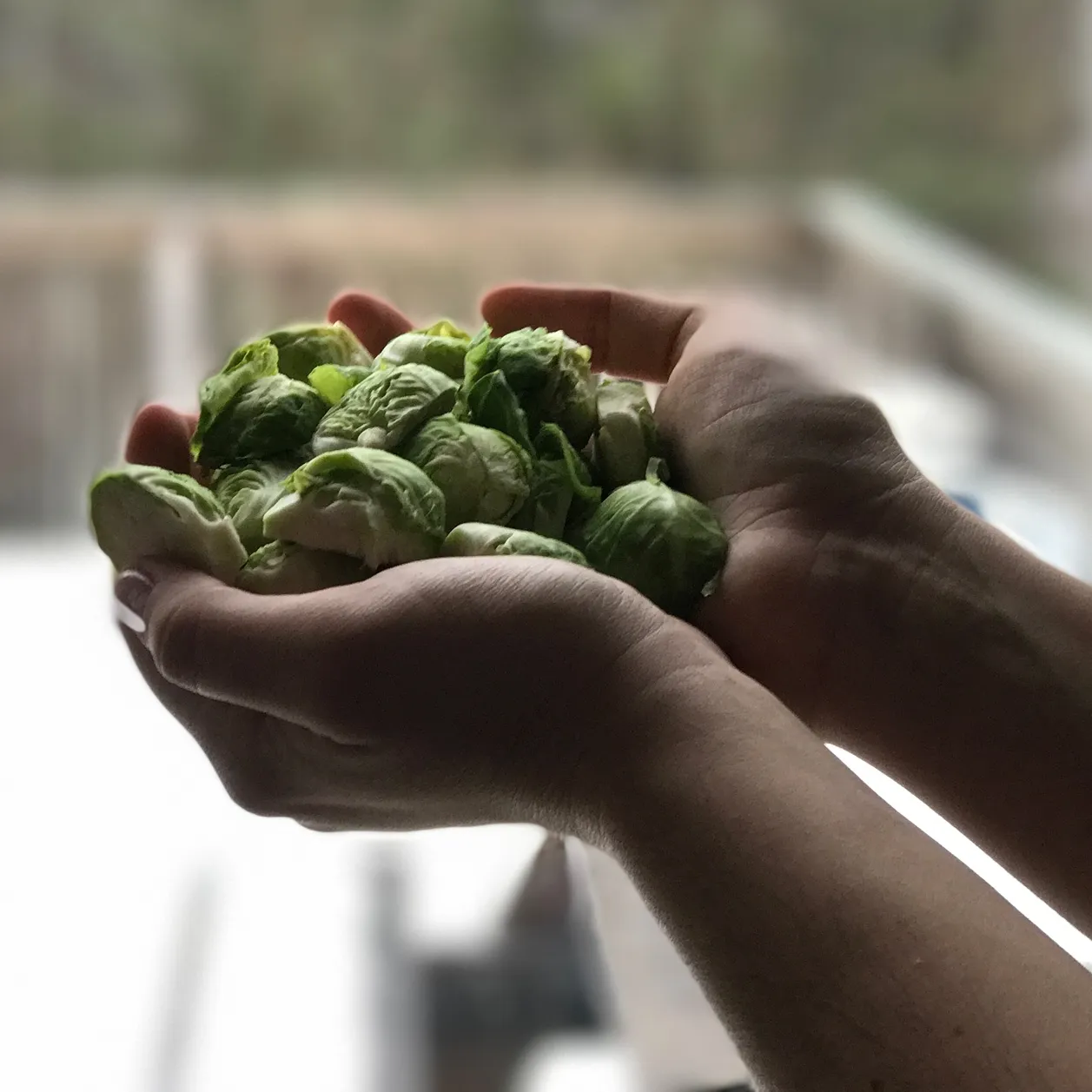
- 1 pint brussels sprouts (about a pound)
- 4 to 6 tablespoons extra virgin olive oil, to coat bottom of pan
- 6 cloves garlic, peeled
- Salt and pepper to taste
- a handful of spaghetti
- 1 tablespoon balsamic vinegar
- 1/2 cup parmesan
Process
- Heat oven to 400 degrees. Trim bottom of brussels sprouts, and slice each in half top to bottom. Heat oil in cast-iron pan over medium-high heat until it shimmers; put sprouts cut side down in one layer in pan (tongs are very helpful here). Put in 5 of your cloves of garlic, and sprinkle with salt and pepper.
- Cook, undisturbed, until sprouts begin to brown on bottom, and transfer to oven. Roast, shaking pan every 5 minutes, until sprouts are quite brown and tender, about 10 to 20 minutes. The smaller the sprouts, the closer an eye you’ll want to keep on them not to burn.
- Meanwhile, boil your pasta to al dente, drain, and with a bit of olive oil lightly brown the remaining clove of garlic. Add the pasta to the garlic and stir, then turn off the heat.
- Remove your brussels sprouts from the oven, stir in the balsamic vinegar, then combine the sprouts with the pasta in a bowl. Top with parmesan and serve.