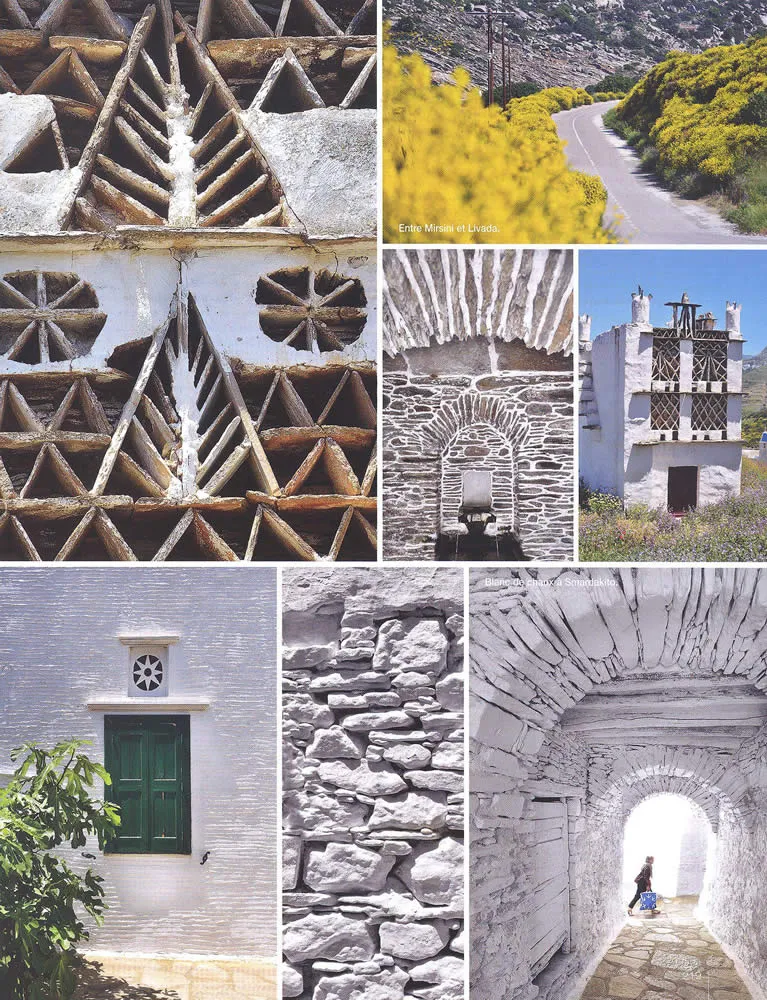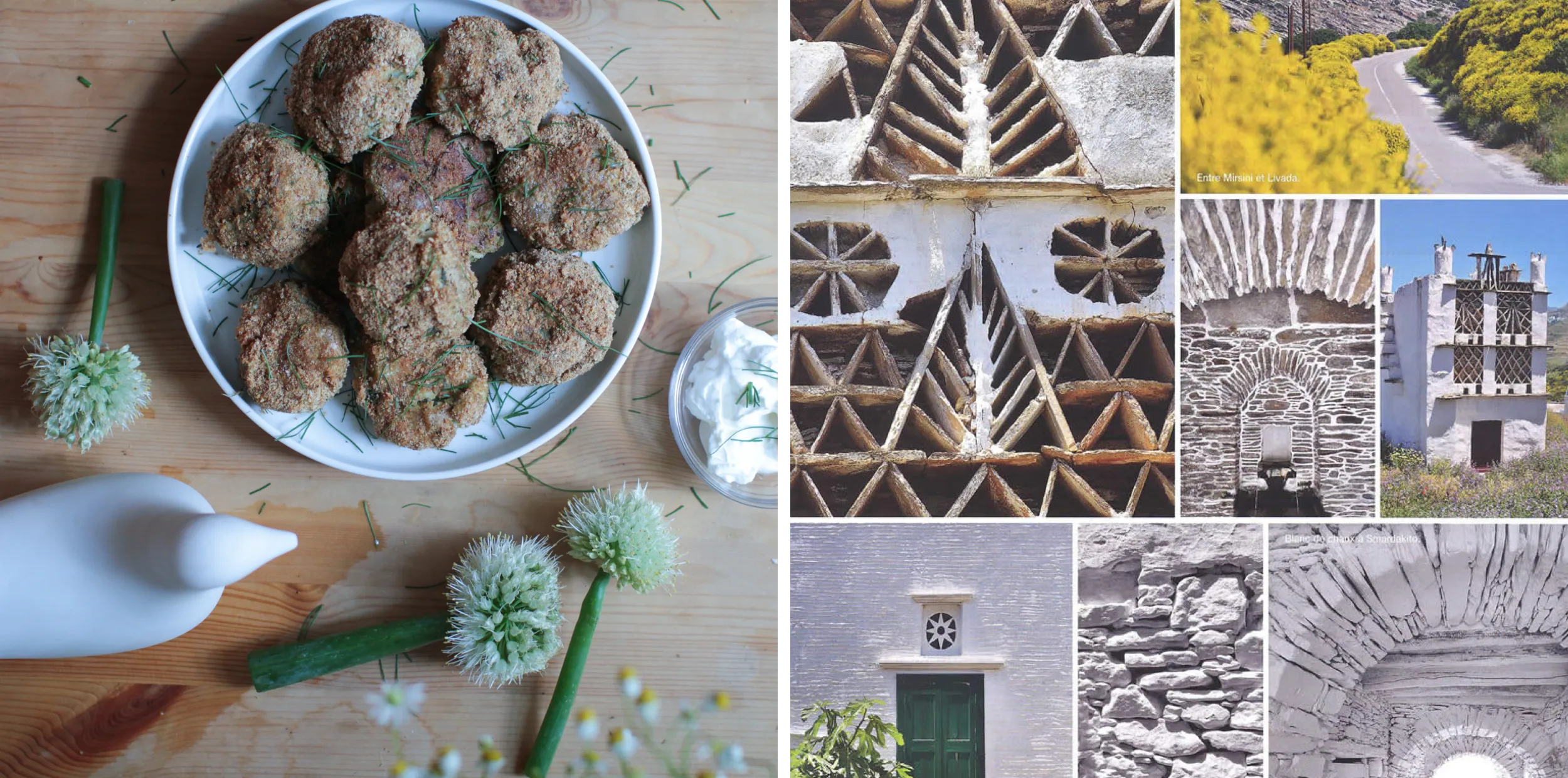
Wild fennel, called “marathos” in Greek, is a defining feature of the Tinian landscape, as you can see in the top right image above. When it blooms, bursts of yellow sweep the roadsides and mountainscapes of this rocky island. You may notice the similarity to the word “marathon;” legend has it the Greeks named the plant “marathos” to commemorate the victorious, decisive battle over the Persians in the year 460 BC near the city of Marathon. The battle was fought in fields that were covered with this plant. I can only hope that those who died in battle on both sides were slightly comforted by the sensuously aromatic plant they lay their heads upon in their final moments. This is the same battle for which Pheidippides ran from Marathon to Athens to announce the Greek victory, dying upon his arrival. 19th century poet Robert Browning commemorated Pheidippides in a poem, where the following line celebrates the plant he is associated with:
“Fight I shall, with our foremost, wherever this fennel may grow,”
After the yellow flowers bloom, they turns into the green seeds that are so flavorful in breads, meat dishes and more. Regular, “un-wild” fennel does not compare to true Greek “marathos”—the flavor is not so intense or balanced with sweetness as that of its wild counterpart. However, it is all one can find if you are anywhere outside of Greece or Italy. To supplement some of the flavor, add in freshly ground fennel seeds to this and other creations. To read beautiful writing on the distinct qualities of wild Greek fennel, please read this article from The Atlantic.
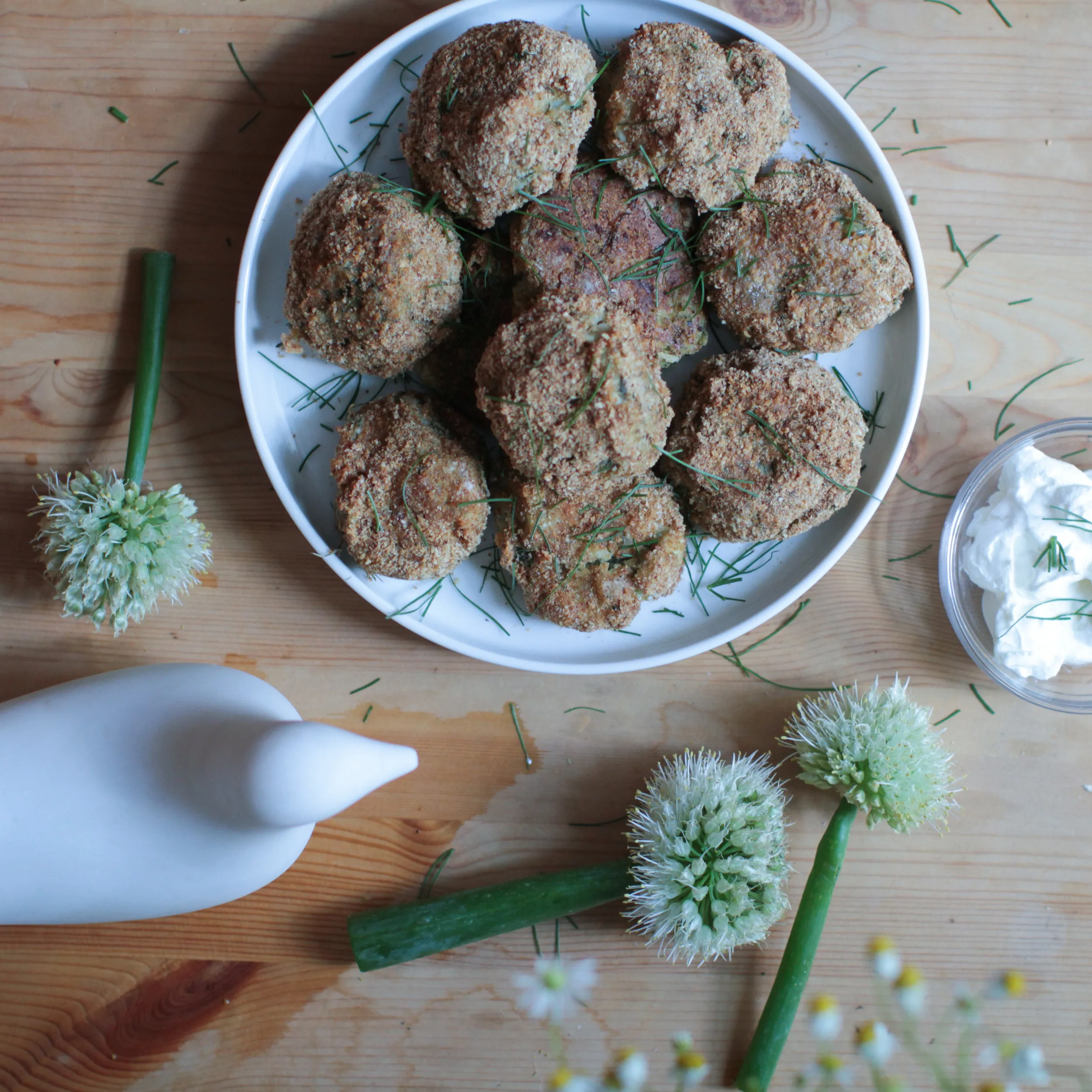
Recipe adapted from Greek Boston
*Note: In the photograph you may notice the croquettes are baked instead of fried. Those in the photo were also an experiment in making gluten-free croquettes, which was not successful, hence why yours will look different from those in the photograph. I suggest you stick to frying these as the recipe suggests, although I would love to hear of any successful gluten-free attempts! If you want more fennel flavor and less potato, adjust accordingly.
Ingredients
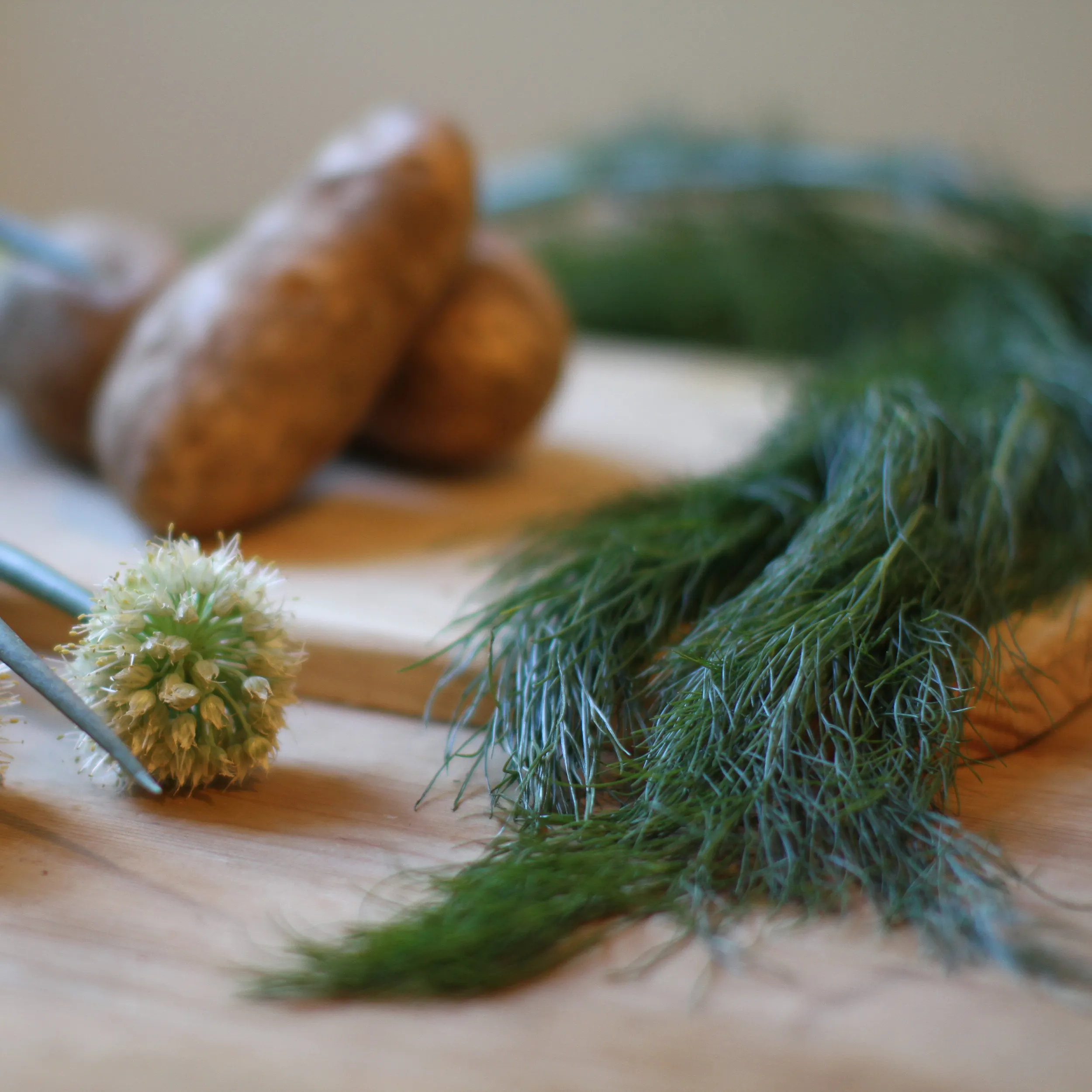
- 1 lb fennel bulb (save the wispy green tops, discard the stalks)
- 1 tsp freshly ground fennel seeds (optional)
- 3 tbsp olive oil
- 1 large onion, peeled and chopped
- 1 tsp black pepper
- 1 cup fresh, chopped parsley
- 1 cup fresh, finely chopped scallions
- 1 tbsp dill, plus more to top with
- 1 egg, lightly beaten
- 4 tbsp all-purpose flour plus 1 cup for coating
- 1 tsp baking powder
- 1 large or 2 medium Russet potatoes, peeled, boiled, and mashed
- 2 tsp salt
- olive oil, for frying
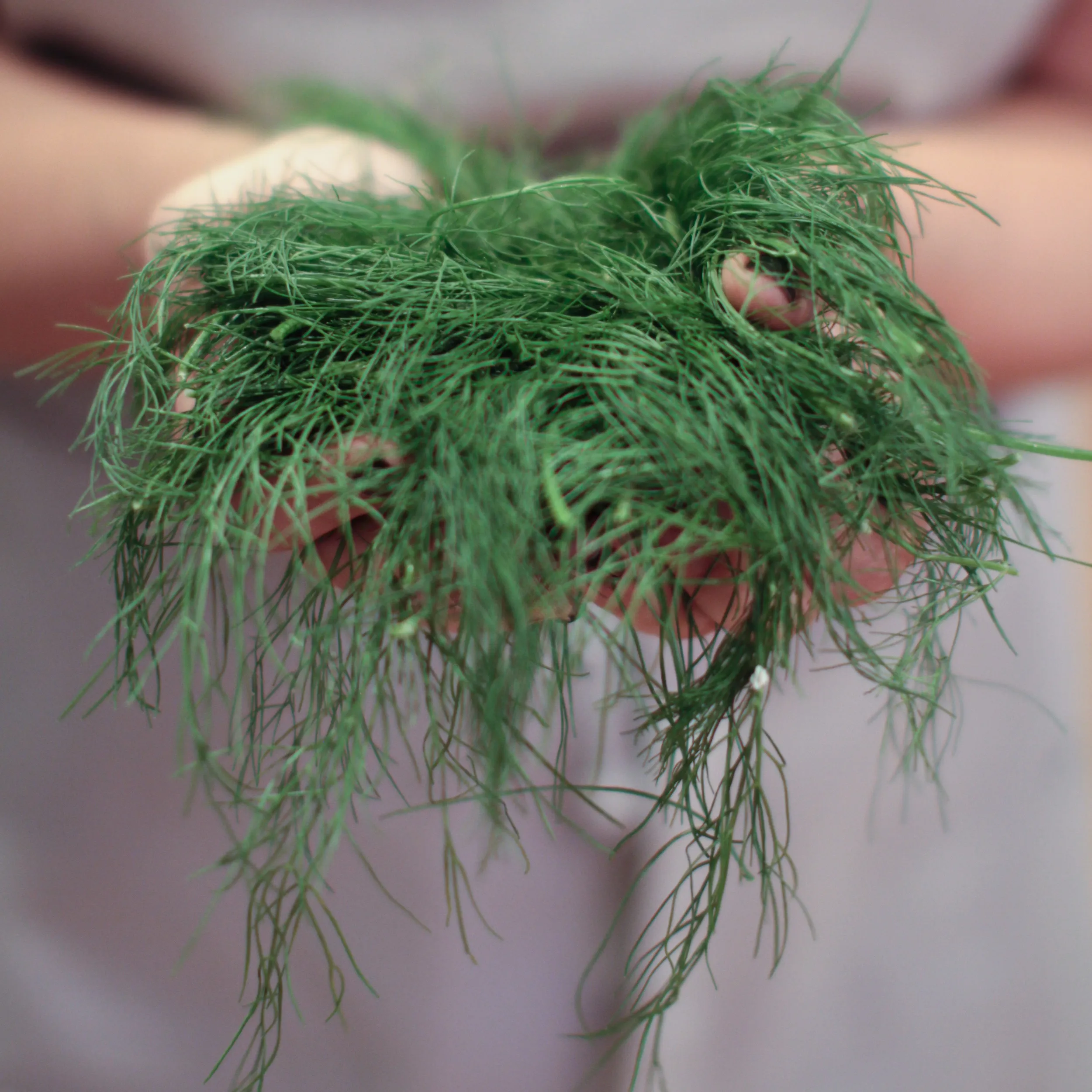
- Roughly chop the fennel bulbs and mince them in a food processor. Chop the fennel tops and set them aside.
- Add the 3 tablespoons of olive oil to a skillet on medium heat. Add the minced fennel and chopped onion and sautee until onions are soft. This should take about ten minutes.
- Transfer the onion and fennel mixture to a large bowl. Stir in the ground fennel seeds, chopped fennel tops, dill, black pepper, parsley, and scallions. Add the flour and baking powder to a small bowl and stir into the mixture. Add the egg; after it is well combined, stir in the potato and salt.
- Drop the mixture in tablespoonful amounts from a spoon into a bowl with the 1 cup of flour. Handle as little as possible, you will find they are delicate and softer than meatballs. Grab them lightly to turn them in the flour and coat them all around. Place each ball on a plate to the side to prepare for frying. If they’re just too difficult to handle, add more flour.
- Add enough olive oil to a non-reactive frying pan to cover the bottom. Heat on medium-high. Drop the flour-coated fennel balls into the hot oil and flatten them slightly with a spatula. Fry for 2-3 minutes on one side until its golden brown. Flip onto the other side and cook for an additional 2-3 minutes. Repeat with the additional mixture.
- Remove the croquettes from the oil, drain on paper towels, and serve.