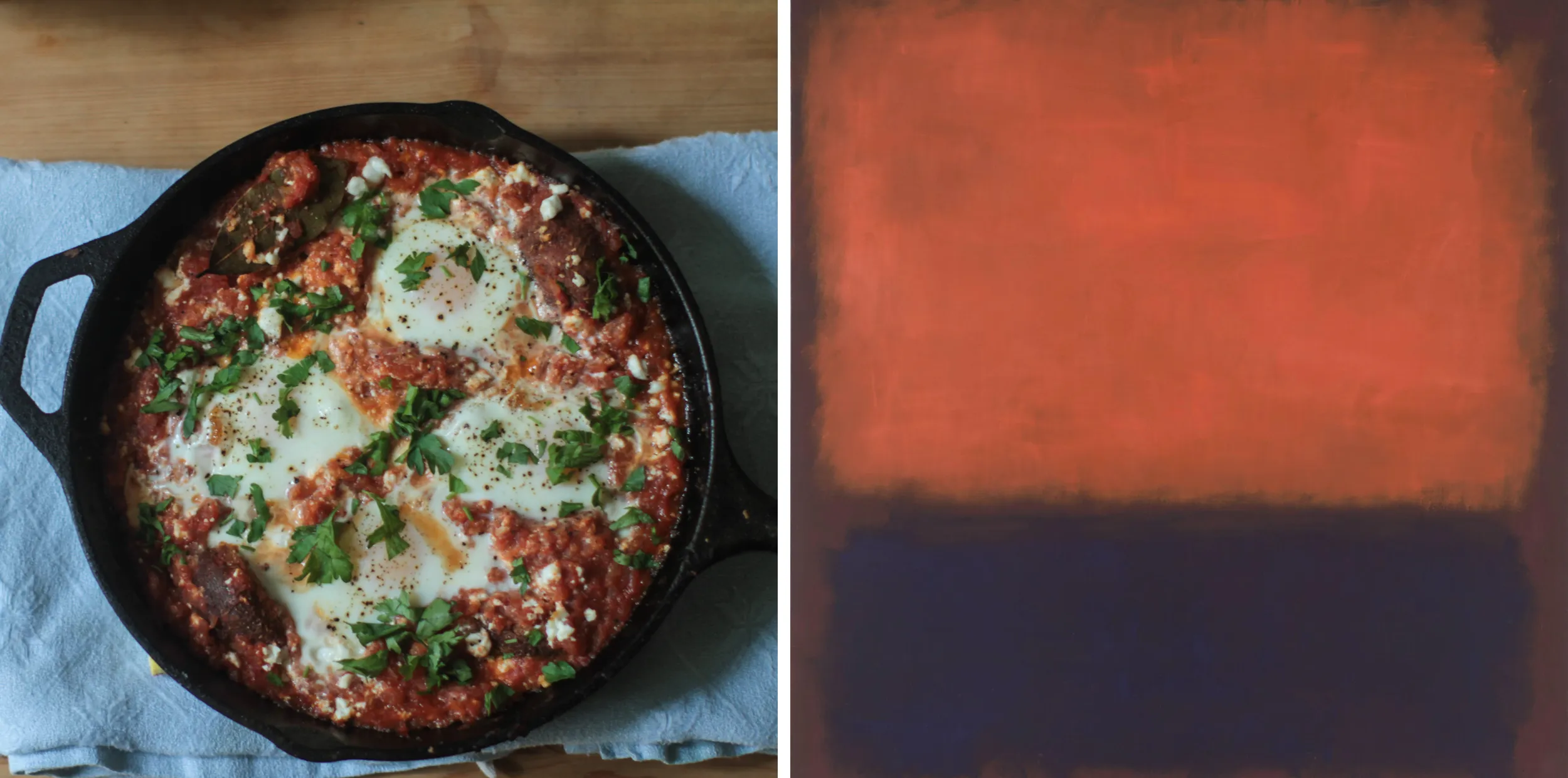
Rothko, oh Rothko. I’m always amazed by how warm, enveloping and human his paintings are. HIs paintings cradle their viewer, becoming them. I consider his work sensitively attuned to what I identify as the female power, warmth, strength, emotion, and life—I like to think this is because he was a) sensitive & gifted, b) a lifelong enemy of patriarchal, commercial power structures, and c) because before he turned to visual art, he was driven by a love of music—a most elemental art form.
Born Marcus Rothkowitz in Dvisnk, Russia (now Latvia), Rothko was six years old when his family emigrated to the U.S. Most known for his “sectionals,” Rothko’s emotional, transcendent canvases eschew figurative and abstract labels alike, aiming to translate interior human states directly onto the canvas. He was influenced by Nietzsche, and wanted his viewers to be subsumed into the larger-than-life paintings they witnessed, often using spatial design to control every aspect of the experience of viewing his work.
Rothko was accepted to Yale but found it too conservative and left; his sole artistic education consisted of taking a still-life course taught by Max Weber. A true badass, he was critical of the dictums imposed by the art market that restricted artists’ total freedom of expression, and was often at odds with “the establishment.” He would occasionally refuse commissions, sales, and exhibitions, and rarely took part in any group exhibitions. He had only been painting three years when he was selected to take part in an exhibit at the Opportunity Gallery—a real hero to those who come belatedly to a beloved art form, or who do not follow traditional society-approved life paths.
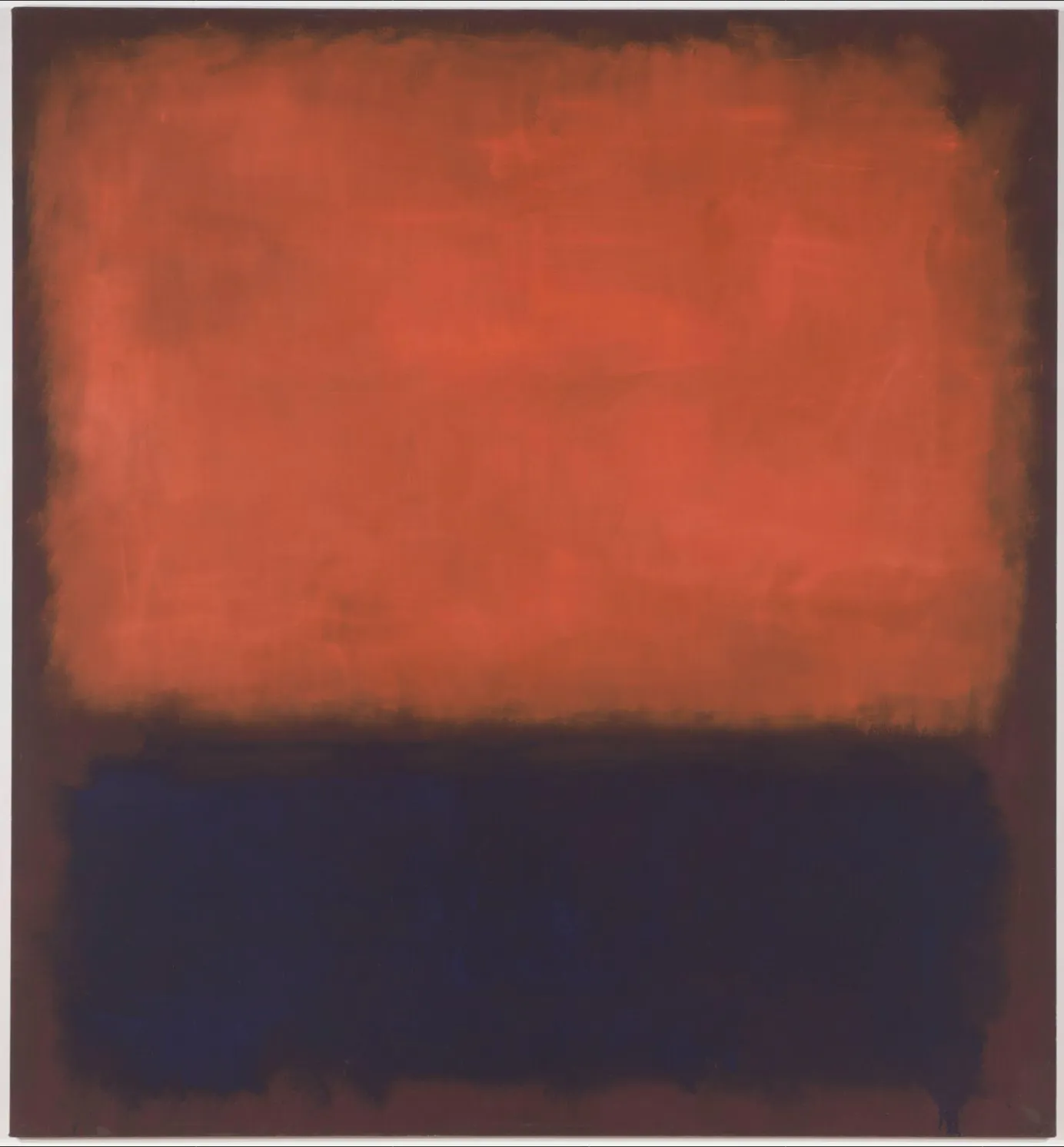
Rothko’s No. 14, above to the right, was created in 1960 and measures 114 1/2 in. x 105 5/8 in. If you live in San Francisco, consider yourself lucky in that you can view this beauty at SF Moma anytime, on the 2nd floor.
To celebrate this painting, I chose to make shakshukha—one of the most comforting, nourishing dishes I can think. Shakshukha does not rely only on its being baked into a comforting warmth; it bursts with a vividness of life through its fresh, vibrant flavors of tomatoes and spices. It takes something as simple as eggs and gives that most elemental, sustaining protein the presence and decorum it deserves. It envelops and cradles its eater with a sense of taking part in something beautifully fundamental, much like Rothko’s paintings.

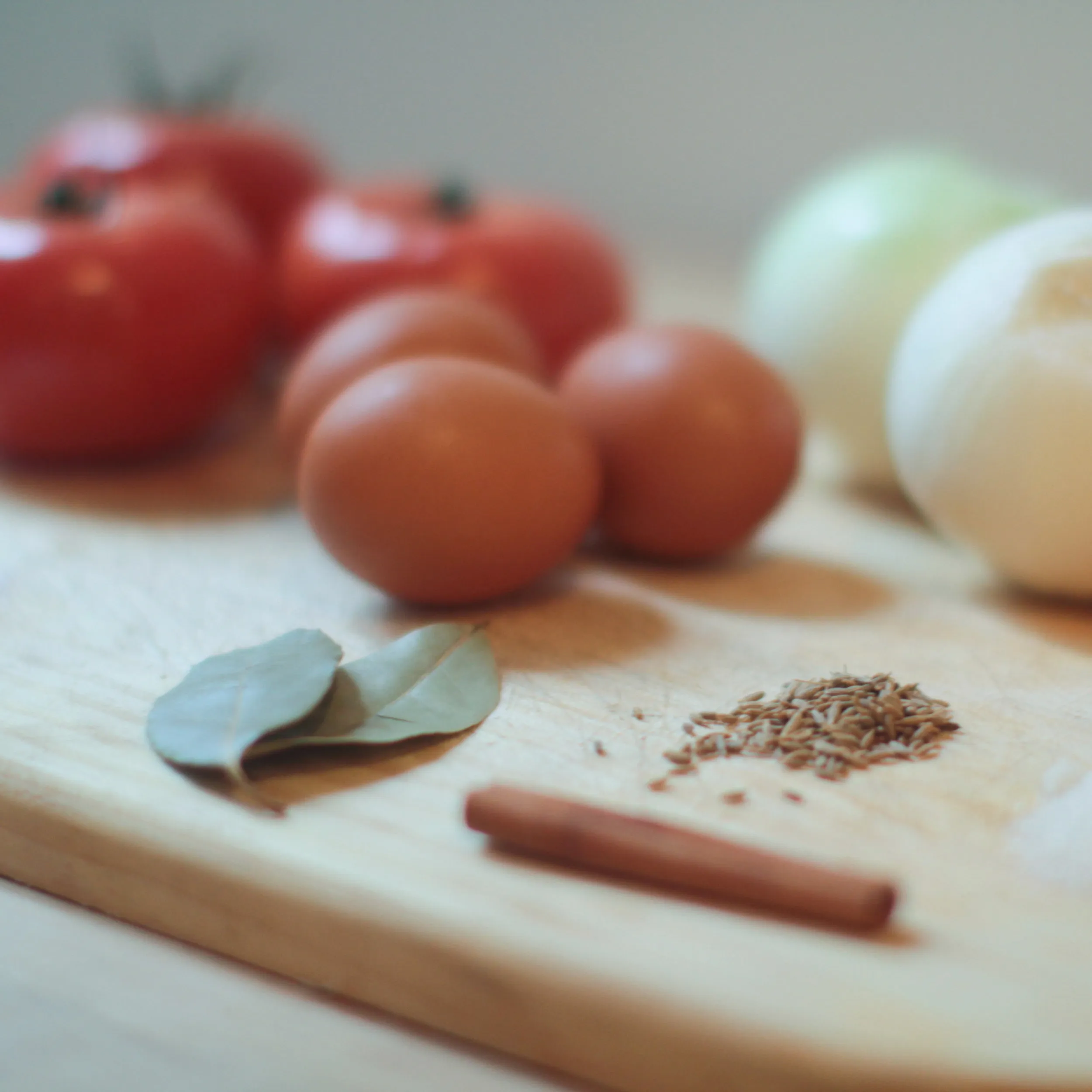
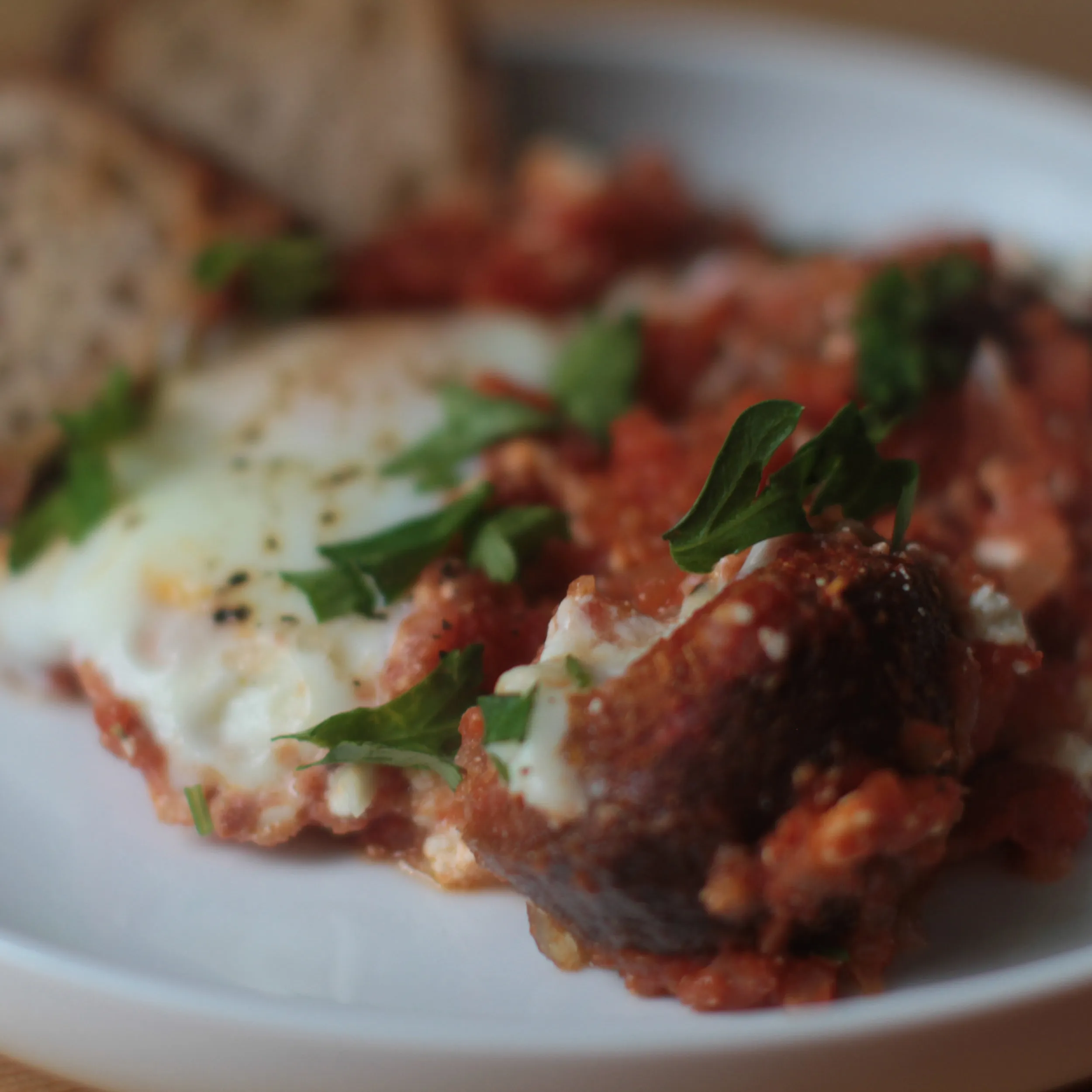
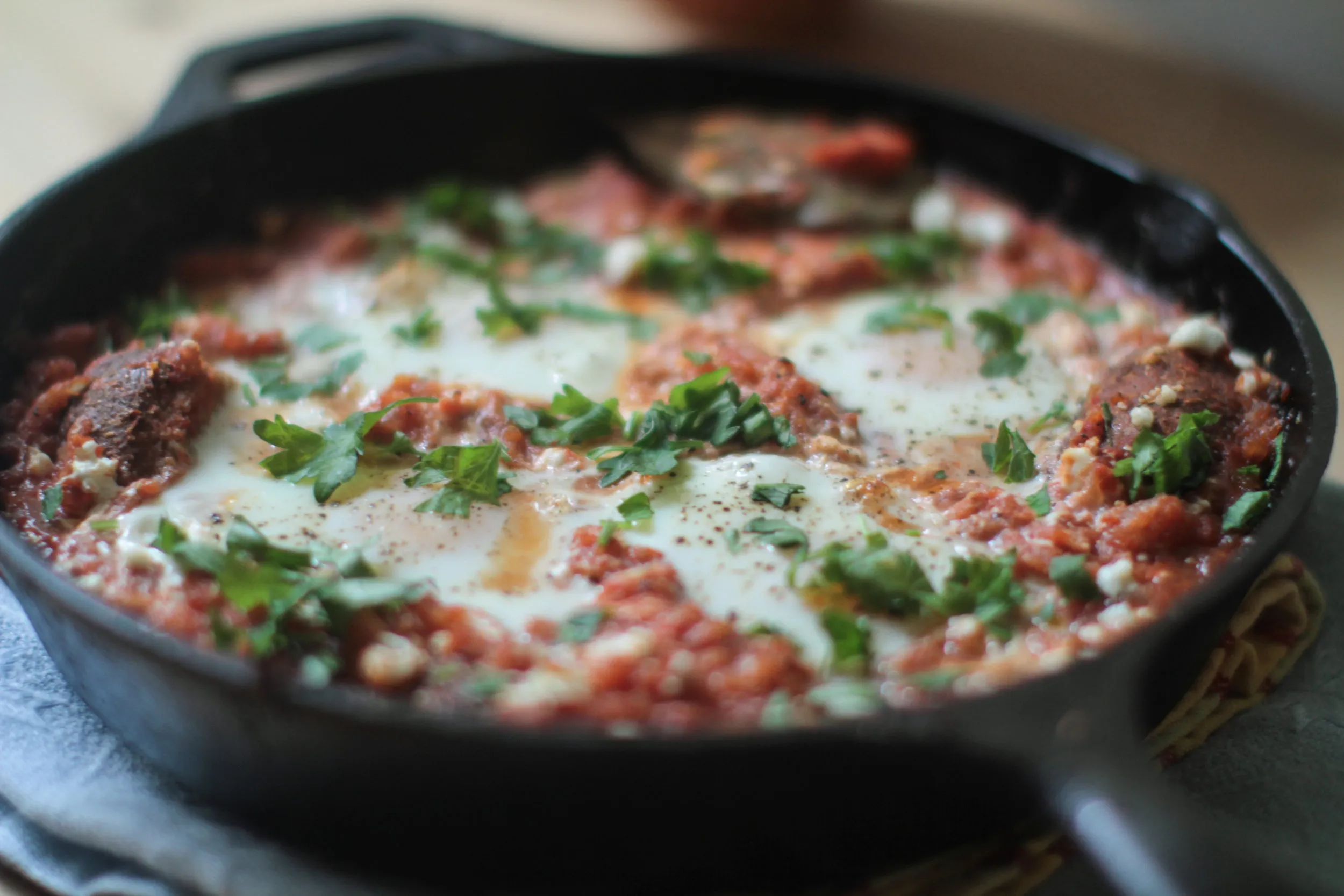
Shakshukha is an Israeli dish, but this recipe more Greek in flavor—which essentially means there’s bay leaf, cinnamon and sugar in the sauce. It’s a variation of my uncle Gianni’s recipe for baked tomatoes & eggs. For a more traditional, spicier Shakshukha, omit the sugar, add a touch of cayenne to the sauce and top with hot sauce at the end. Or try it all together and let me know how it goes!
A note on tomatoes: You will really be rewarded for putting in the effort to work with fresh, quality tomatoes. If you really want shakshukha and can’t get good tomatoes in season or just don’t feel like dealing with them, use a 28 oz. can of whole plum tomatoes instead. Better yet, do your tomato seeding and grating in the summer and freeze them to have great ingredients to work with in the winter! As Uncle Giannis says, commercially-raised tomatoes sold in the winter taste “plastic and chemical!”
This recipe technically serves 4, but it’s more like 2 if you love it as much as we do. I make it in a 10” cast iron skillet—if you have a larger one, feel free to up the amounts!
Ingredients
- 4 tbsp olive oil
- 1 large onion, chopped
- 1 red bell pepper, diced
- 4 garlic cloves
- 1 tsp salt
- 1 tsp ground cumin
- 1 bay leaf
- half stick of cinnamon
- 1 tbsp sugar
- 10-12 whole fresh tomatoes (2lb; if substituting with canned, use 28 oz. of plum tomatoes)
- 1 cup crumbled feta
- 4 large eggs, at room temperature
- chopped cilantro, for serving (optional)
- crusty bread, for serving (optional)
- Heat oven to 375°.
- Cut the tomatoes in half, squeeze them to get the majority of the water out (but not all), then scoop the seeds out, saving a few. The seeds add too much water to the sauce but retain a great tomato flavor; this is why you want to include a few in your sauce.
- Rub tomatoes on a grater, getting as close to the peel as you can. Compost the peels. Set grated tomatoes aside.
- Heat 3 tbsp of the olive oil over medium-low heat in a cast iron skillet. Add the onions and bell pepper and sauté for 20 minutes until quite tender. About ten minutes in, add half the salt.
- Add the garlic and cook for another minute or two.
- Add the salt, cumin, bay leaf, cinnamon and sugar and stir, cooking for another minute.
- Add the grated tomatoes, turn heat to low, stir and cover, checking intermittently to see when the liquids have evaporated. The more time you have, the slower you want to cook this, between 10-20 minutes.
- Stir the remaining tablespoon of olive oil into the sauce, as well as the crumbled feta, leaving some of the feta on top.
- Form 4 wells in the sauce, and crack an egg into each one. Sprinkle with the remaining 1/2 tsp of salt. Place the skillet in the oven and bake until eggs are set, 8-10 minutes.
- Sprinkle with cilantro and serve with some crusty, lightly toasted bread. Enjoy!
Sources:
Holzwarth, Hans Werner. Modern Art 1870–2000. Impressionism to Today. Vol. 2, Taschen, 2011. “Mark Rothko Biography, Art, and Analysis of Works.” The Art Story, www.theartstory.org/artist-rothko-mark.htm