I created this pairing in honor of my friend Mitra, a radiant creature who not only seems to have direct access to a well filled with the energy of life itself, but who draws upon it happily in order to pass the water around in ladles to those around her. I think of her as a kind of enlightened goddess and water maiden, a threshold guardian full of both the boundless wisdom that comes through inspired seeing and the festive cheer of someone forever young. She finds wonder in everyday things and thinks nothing of faults you yourself may fret over. She drinks tea with roses in it and it makes you wonder why all tea is not adorned with flowers—or for that matter, why all people aren’t. She makes it feel acceptable to wear a ball gown to a picnic, simply if you feel like it. She devotes herself to the most noble of professions—arranging words, letters, spaces and concepts into passages by which human beings learn about each other and themselves—and laughs it off when you try to praise her for it. She gets angry at injustice and moved by love. She is inspired and inspiring.
On a frigid day in December, Mitra traipsed across the East River to come over for tea. Six months prior she had stood in a river of flood water in order to marry me to my love with words more meaningful than any a priest could have uttered. Submerged in cold water, she was as unfazed by the flood as I was, although I had the love of my life to focus on and rainboots on my feet, while she had a ceremony to execute over the roar of storm water in drenched heels and only the aid of a wet folder. Whether it’s for tea or a wedding, there often seems to be inclement weather involved in our meetings, but she always traverses it with determination and cheer like a fireball of sunshine plowing across a frozen tundra. Because she creates warmth where there is cold, I often associate Mitra with the color red—a deep, luminous crimson or ruby, like the color in the well of a hibiscus, the orange-to-purple light in a poppy, and the color gradations in a peonie folded in on itself. At her own wedding, her flowers and shoes were this very color of red and I smiled at my minor ability to pair personality with aesthetic, a skill I employed often when I worked in a flower shop and felt it my duty to understand a person in the few seconds I had to connect with them before making them a personally meaningful bouquet.
This same color red often appears in the paintings of Nicholas Gyzis (see below), a painter who I have featured before in the post for Melomakarouna, the greek Christmas cookie I paired with a painting of child carolers. Gyzis is one of the most celebrated painters of Greece and is from Tinos, the island that my family is also from and one rich in artistic history. He often uses this vivid red on a small portion of the canvas, like a small but powerful hearth that lights up the rest of it. This same red is also the color that eggs are traditionally dyed for Easter, using a mixture made of red onion peels. Easter is the holiday which serves as the most intensive celebration of the Christian tradition in Greece. Given the threat to Greek nationalism and suppression of the primary religion in Greece during the Ottoman conquest from 1453 to 1821, this color usage in Gyzis’ paintings and the paintings of his peers such as Nikoforos Lytras may represent the undying embers of Hellenism which survived the period of Ottoman rule.
 Paintings by Nicholas Gyzis, note the use of red. Left to right: The Barbe r (1880), First Learning (1868), Boy with Cherries (1888), The Secret School (1885), Grandfather of Two (date unknown), The Stepmother (1883), Old Man Wearing a Red Fez (date unknown)
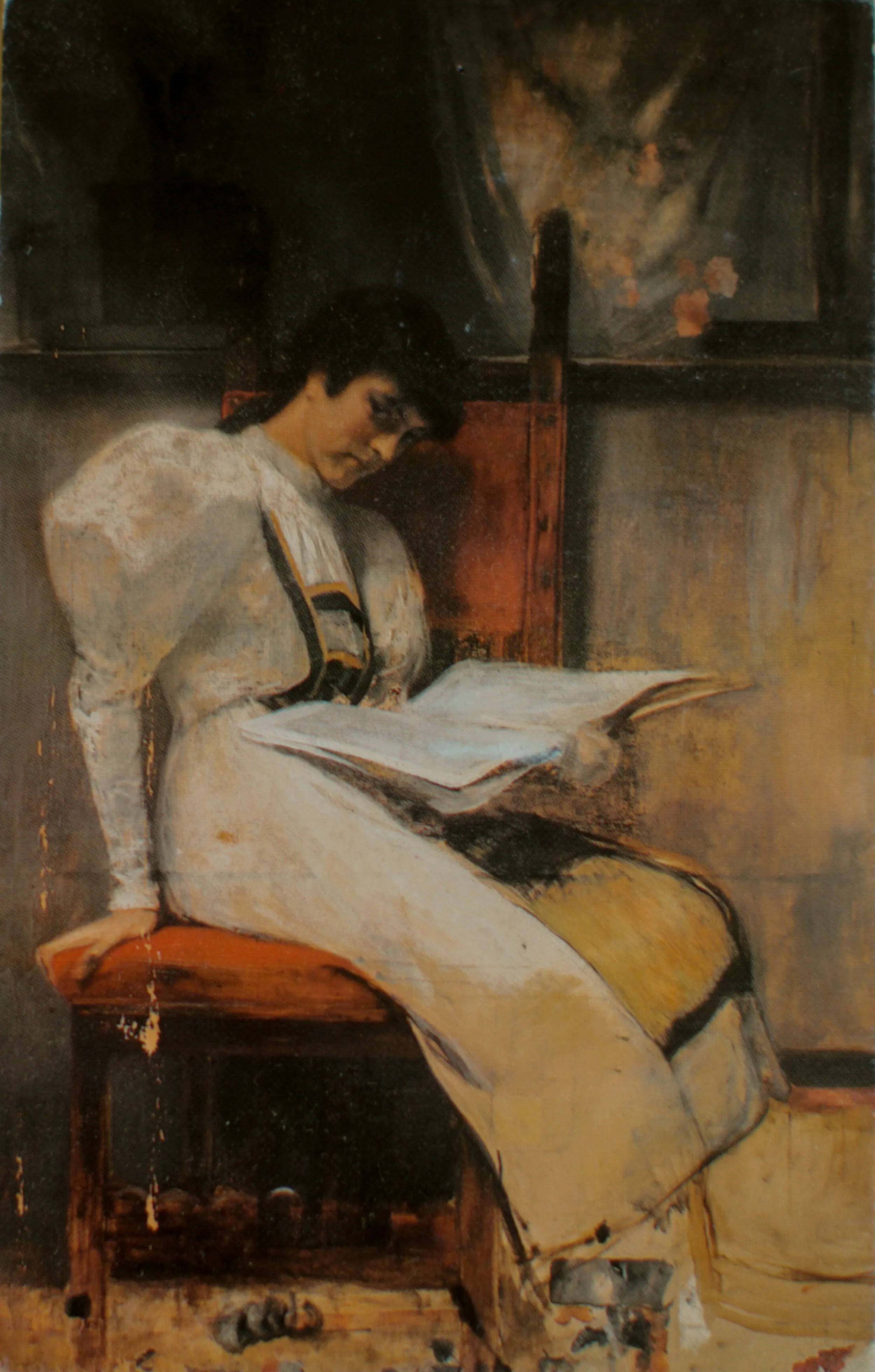
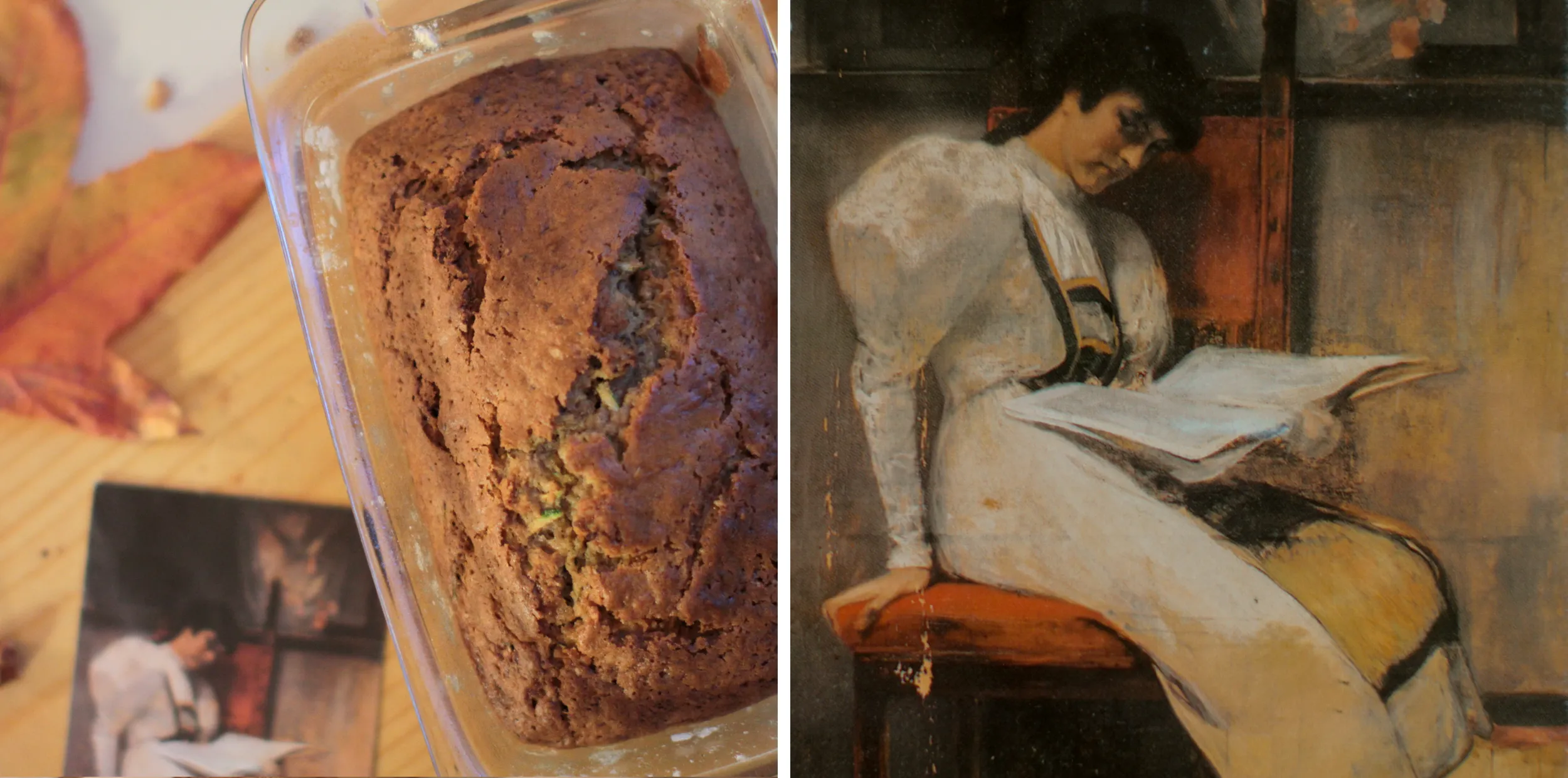
The painting used in this pairing, *Portrait of the Artist’s Daughter Penelope *(1893) is an apt celebration of Mitra both for its use of red and for the presence of a strong woman with a book (if my language was too flowery to pick up on it earlier, she is a writer.) For her tea visit I made a beloved zucchini bread recipe—she waited patiently while I photographed it for Faye Makes Food. It is crafted from shredded zucchini, dried plums, walnuts and cinnamon. It is moist, comforting and warm, and tends toward the sweeter side of the bread-to-dessert spectrum. It is easy to make and will fill your home with a soothing aroma hours after it is baked. Pour some tea, find a friend to make it for, and enjoy.
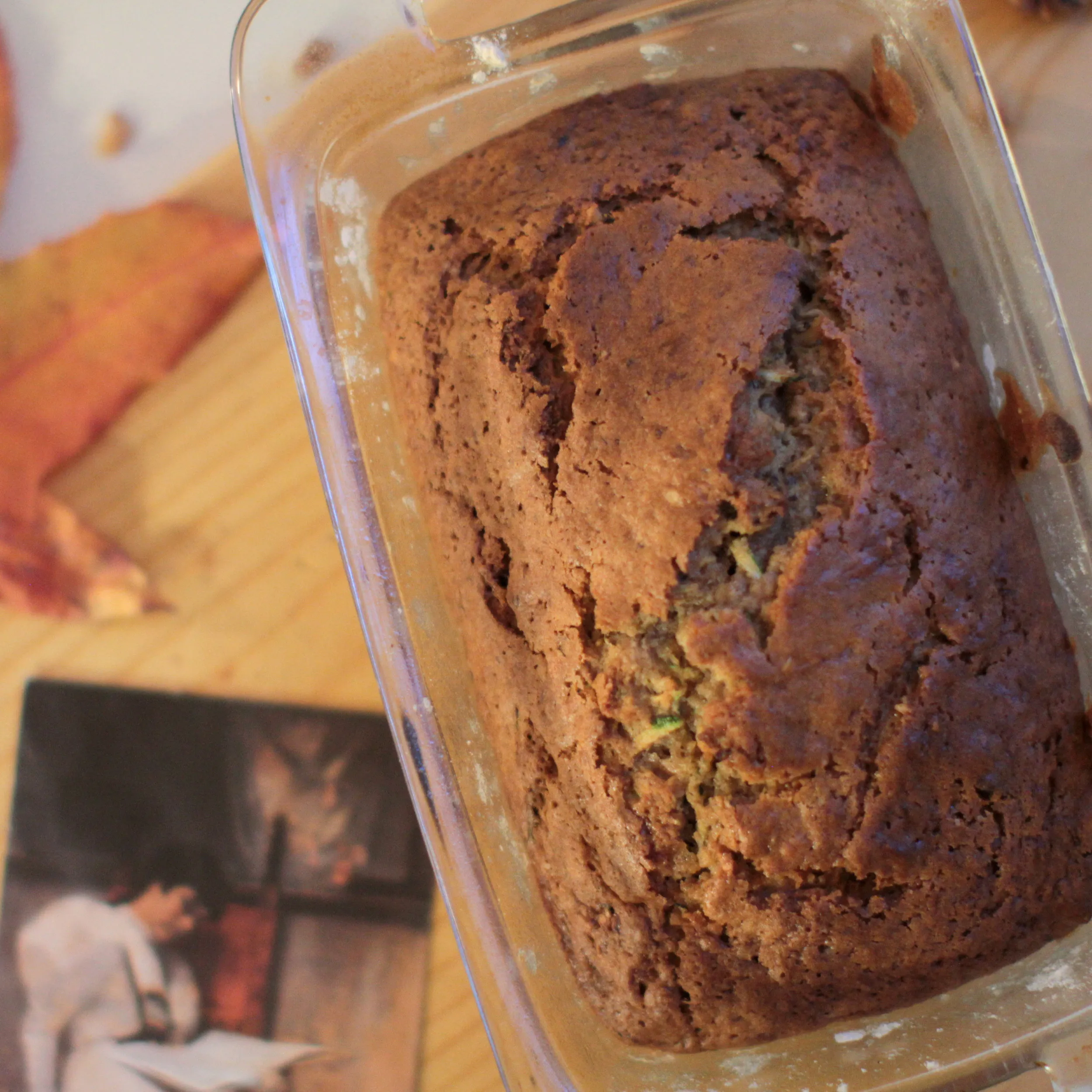
This recipe comes from the The Williams Sonoma Cookbook, page 334. While I now own a full on cookbook collection, this was my first (and for a long time only) cookbook. I highly recommend it. It covers an array of recipes for all occasions, there is an ease and manageability to all the recipes I have tried from it, and I’ve never had something from its pages taste less than wonderful. Other favorites include their cheesecake recipe, banana bread (substituting hazelnut meal), and spaghetti a la carbonara. Sadly it’s no longer available for purchase in physical form, but there is contact information here in case you feel inclined to track it down.
Ingredients
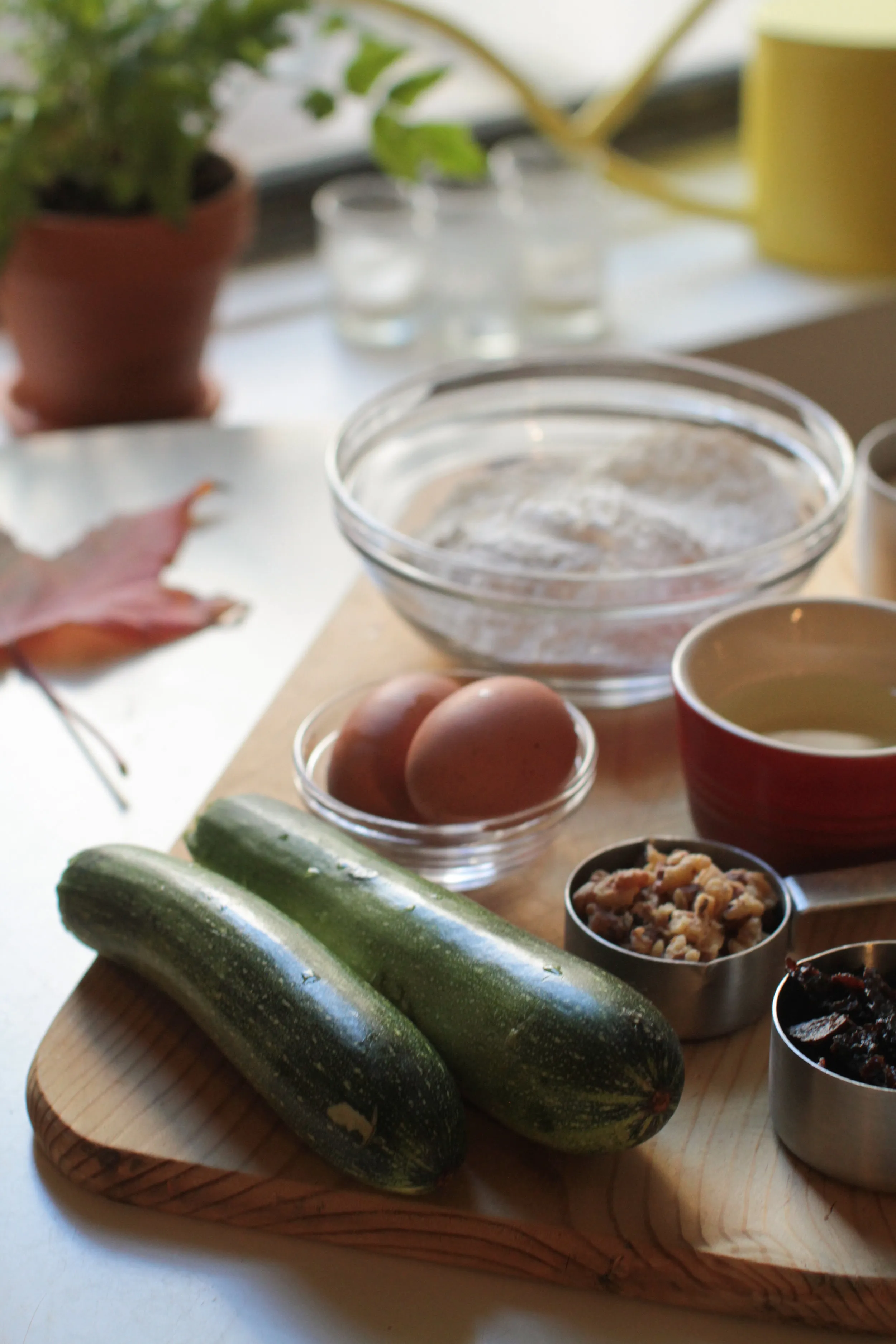
- 8 oz (125 g) zucchini, trimmed
- 1/2 cup (4 fl oz / 125 ml) canola oil, plus extra for greasing
- 3/4 cup (6 oz / 185 g) sugar
- 2 large eggs
- 1 tsp vanilla extract
- 1 ½ cups (7 ½ oz / 235 g) unbleached all-purpose flour, plus extra for dusting
- 2 tsp baking powder
- 1 ½ tsp ground cinnamon
- ½ tsp sal
- ¼ tsp baking soda (bicarbonate of soda)
- ½ cup (3 oz / 90 g) chopped pitted moist-pack dried plums (prunes)
- 1/3 cup (1 ½ oz / 45 g) coarsely chopped walnuts
Process
Preheat the oven to 350°F (180°C).
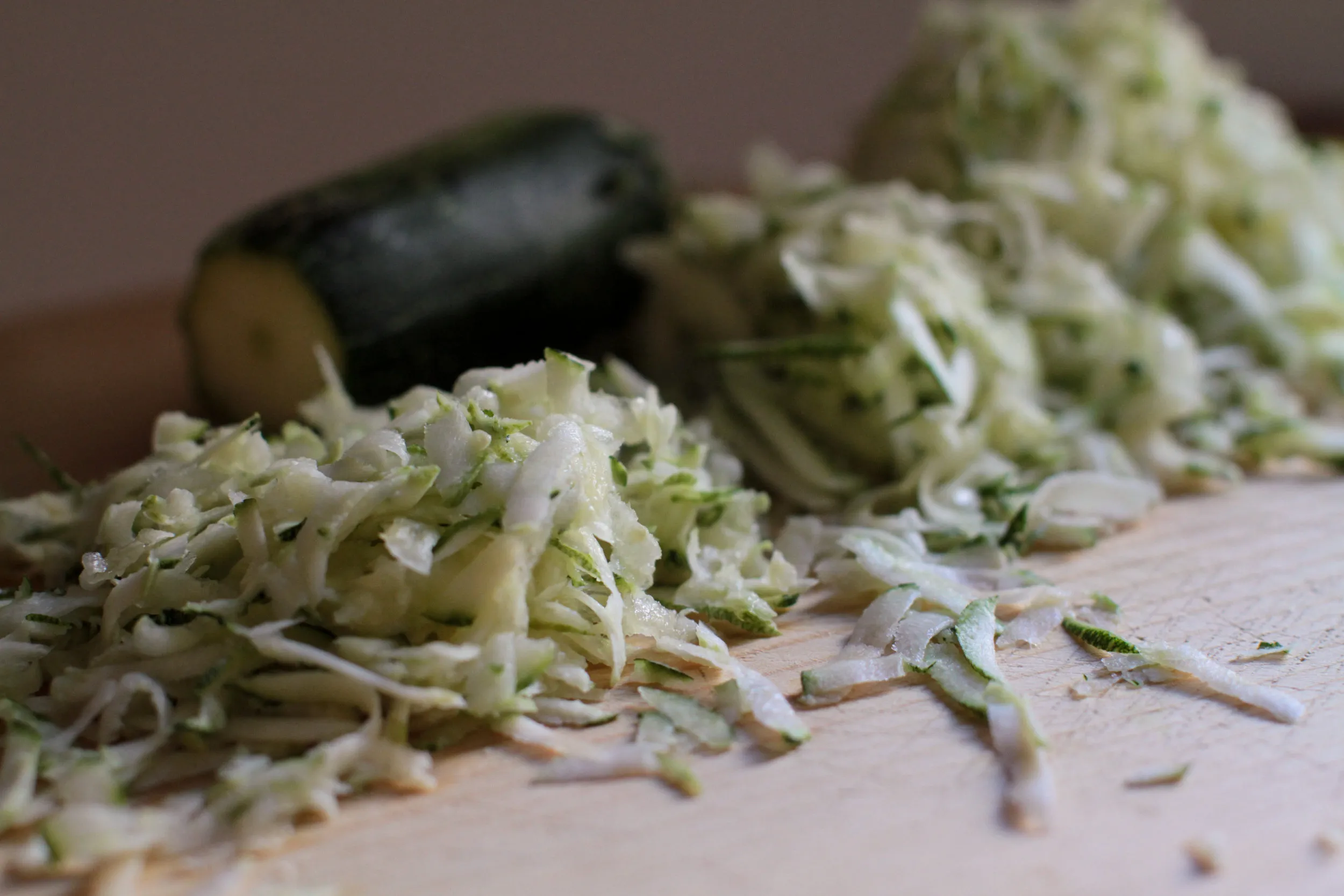
Grease and lightly flour one 8 ½-by 4 ½-inch (21.5-by-11.5-cm) loaf pan. Using the large holes of a box grater-shredder or the large-holed shredder bald of a food processor, shred the zucchini. You should have about 1 cup (5 oz/155g), some more is fine. Set aside.
In a bowl, combine the oil, sugar, eggs, and vanilla. Beat vigorously with a whisk or with a mixer on medium speed until pale and creamy, about 1 minute. Stir in the shredded zucchini until blended.
In another bowl, stir together the flour, baking powder, cinnamon, salt, baking soda, plums, and walnuts. Add the flour mixture to the zucchini mixture and stir just until combined. The batter will be stiff. Scrape the batter into the prepared pan. Bake until the bread is firm to the touch and pulls away from the pan sides, 50-60 minutes. A cake tester inserted into the center of a loaf should come out clean. Let cool in the pan on a rack for 10 minutes then turn the bread out onto the rack to cool completely. Enjoy!